Fit your parking space
Consider the position and cable route around the way you arrive and leave.
 Email Vireo
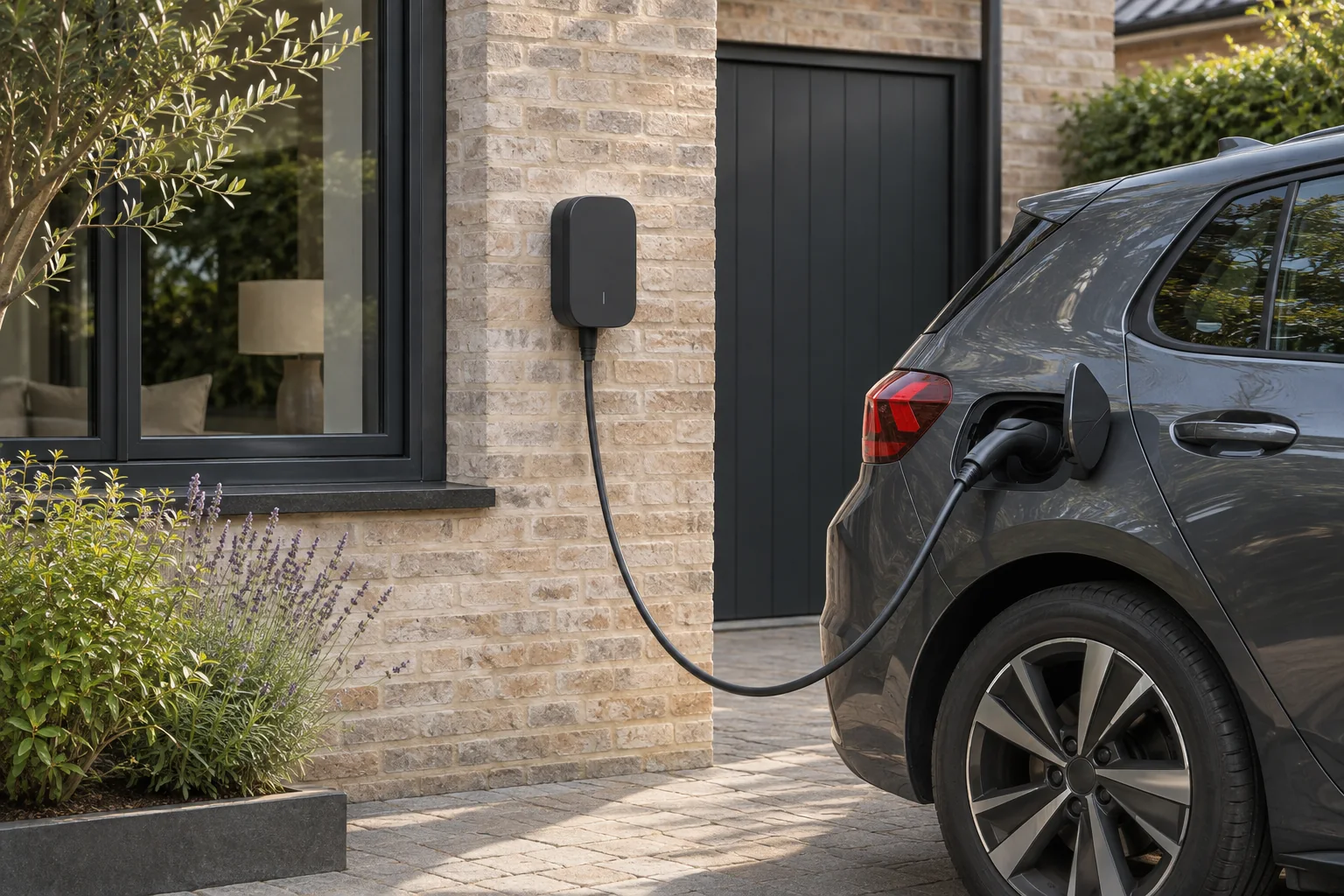
Explore a home chargepoint that fits your car, parking space and routine. A practical plan starts with where you park, how you drive and the electrical setup at your property.
Online planner coming soonEmail Vireo with your postcode, where you park and the car you have or are considering. We can discuss your interest and confirm availability and next steps. Online planning is coming soon.
The useful details are often the everyday ones: the side you park on, where the car's charging socket sits and how you want to manage the cable.
Consider the position and cable route around the way you arrive and leave.
Share your usual mileage and when the car is parked at home to help frame the charging discussion.
Mention solar panels, a home battery or future energy plans so compatibility can be considered early.
Email is the first step for now. Availability and the route to a survey or proposal will be confirmed before you make a commitment.
Share the model you have or are considering and how you usually use it.
Describe your driveway, garage or allocated space and where you would like the chargepoint.
Any installation needs the electrical supply, cable route, access and relevant permissions assessed.
Before proceeding, the charger, installation scope, controls and price should be clear.
The location should work for daily use as well as the electrical installation. Tell us about shared parking or rented property at the start.
If solar is on your list, discuss it alongside the chargepoint. When the car is at home and the compatibility of the equipment will shape the options.
Explore solar PVThe honest answer matters more than the quickest one.
A tethered charger has a cable attached. An untethered charger has a socket for a separate cable. The choice comes down to compatibility, cable handling and how you want the parking space to work.
That depends on the car's charging capability, battery size, how much charge it needs and the chargepoint's available power. Share your vehicle details so the discussion reflects your car rather than a generic charging time.
A suitable setup can use solar generation for charging, but the available generation and when the car is plugged in both matter. The charger, controls and existing solar equipment need a compatibility review.
Tell us about the property and parking arrangement before choosing equipment. Permission, access and the electrical route need to be considered. Email Vireo to discuss whether a home installation is a practical option; online planning is coming soon.
Tell us about your car, property and parking space. We can discuss your interest and confirm the next step while online planning is being prepared.