Use solar later
A battery can hold some daytime solar generation for use later in the day.
 Email Vireo
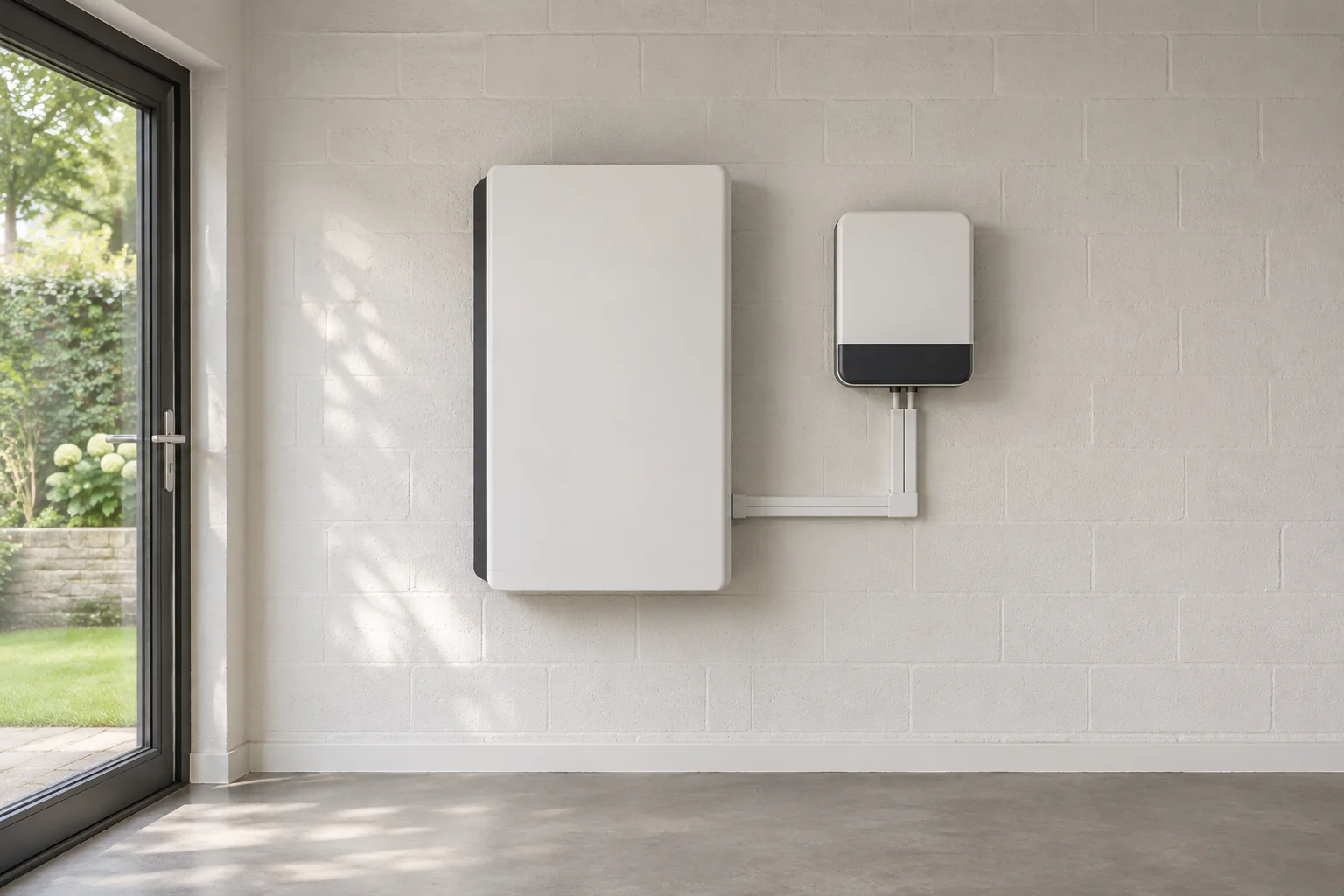
A home battery stores electricity for later use. Explore storage alongside solar panels or as a separate system, with your routine, available space and existing equipment at the centre of the plan.
Online planner coming soonEmail Vireo about your property, any existing solar panels and what you would like from a battery. We can discuss your interest and confirm availability and next steps. Online planning is coming soon.
A battery is one part of a home energy system. Start with when you use electricity, what you already have and what you want the system to do.
A battery can hold some daytime solar generation for use later in the day.
Some systems can charge from the grid. Their operation needs to be considered alongside your electricity tariff.
Mention an electric car, heat pump or planned extension so the discussion starts with the whole home.
A useful conversation starts with your household routine. Availability and the route to a survey or proposal will be confirmed before you make a commitment.
Share your postcode, property type and whether you already have solar panels.
Think about when you use the most electricity and any changes you are planning.
A design needs equipment compatibility, location, electrical arrangements and cable routes checked.
Before proceeding, the proposed equipment, controls, scope and price should be clear.
The right discussion covers the installation as well as the capacity. Existing solar and any backup-power requirement need to be raised early.
If you are considering panels as well as a battery, bring both into the conversation. The roof, available equipment space and your daily routine can be assessed together.
Explore solar PVThe honest answer matters more than the quickest one.
Yes, some systems can store electricity taken from the grid. Whether that suits your home depends on the system, your energy use and tariff. It needs to be assessed rather than assumed.
Do not assume so. Backup power needs a system and installation designed to provide it, and not every battery supports it. Tell us if backup matters to you so its scope and limits can be discussed.
It may be possible, but compatibility needs checking. Details of your existing panels, inverter and installation will help establish which routes can be considered.
Start with your electricity use, when you use it and any solar generation. The assessment should consider both how much energy the battery stores and how much power it can supply at a time. Online planning is coming soon; email Vireo to discuss next steps.
Tell us about your existing setup and what you would like to achieve. We can discuss your interest and confirm the next step while online planning is being prepared.